



Aomori Prefecture is located in northernmost of Honshu in Japan, and so its climate is cool and it has four clearly distinguishable seasons. Also Aomori, which is rich in natural beauty such as the Shirakami-Sanchi that is designated as the World Heritage in December 1993 and Towada-Hachimantai National Park, is the largest apple-producing prefecture in Japan.
Aomori Prefecture produces 56 % of apple produced in Japan, it means that more than half amount of made-in-Japan apple is “Aomori’s Apple”. Aomori is the largest apple-producing prefecture as for cultivating area and amount in Japan. By the varieties, “Fuji” occupies approximately 50%, and “Orin”“Tsugaru” and “Jonagold” are following.
Aomori’s Apple-producing Rate by Varieties

Data: Statistics by Ministry of Agriculture, Forestry and Fisheries
Varieties of Apple
Fuji

| Harvest Time | Early November |
|---|---|
| Size | around 350 grams |
| Fuji apple is a variety that is produced the largest amount in the world. The flesh is slightly rough and wildly juicy. And also it has balanced taste with sweetness and tart. | |
Orin
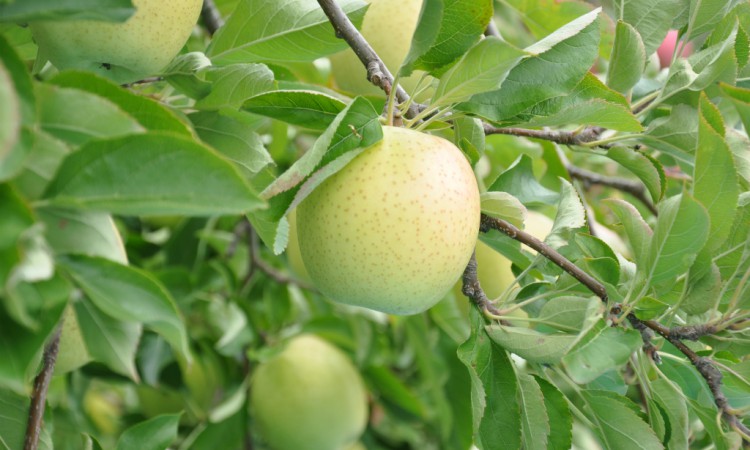
| Harvest Time | Late October to Early November |
|---|---|
| Size | around 300 grams |
| Its skin has yellowish green color. Although it looks strong in acid, it is super sweet. And the flesh is slightly firm with light texture. | |
Tsugaru
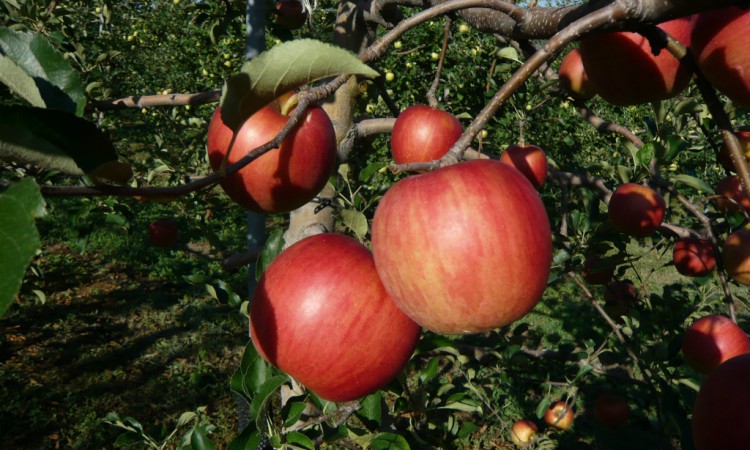
| Harvest Time | Early-to-Mid September |
|---|---|
| Size | around 300 grams |
| Tsugaru is the early maturing apple that is developed in Aomori. It is a cross between Golden Delicious and Kogyoku. Its feature is sweet with slightly tart and juicy. | |
Jonagold

| Harvest Time | Mid October |
|---|---|
| Size | around 350 grams |
| It is slightly tart but also sweet, so it tastes deep and mild sourness. It is great for processing. | |
“Delicious Apple” Farming
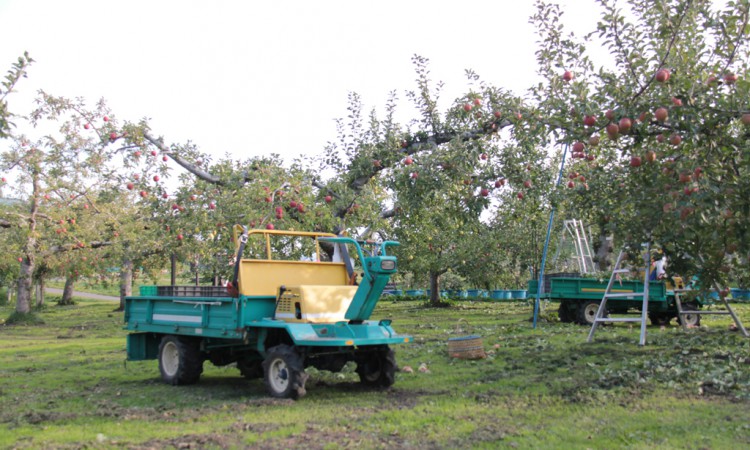
On apple cultivation, farmers give their effort with manual labor for most of the tasks through the year. Each work is necessary to grow delicious apples. Usually it takes approximately 223 hours per 100 square meters and some of tasks need great skill.
Main process
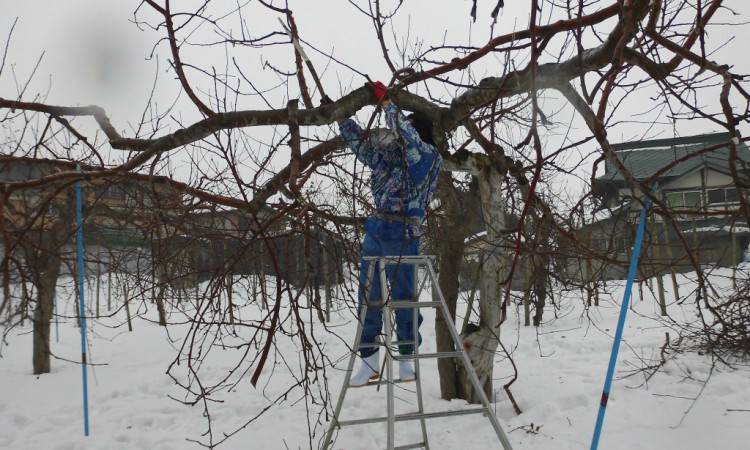
Training and Pruning: Late January to March
Training and pruning are the first essential tasks for apple cultivation and in Aomori Prefecture it is thought that they are the most important skill. So that apple trees will receive uniformly abundant sunshine, farmers train and prune the trees and set proper orchard framework every year. This is very difficult task and it is said that “To be skilled, you need to train and prune one thousand trees.”
Fertilizing: April
Human beings need nutrition, and apples do as well. In April, farmers fertilize trees to give appropriate nutrition. And it will be done again in June, when apple fruits began to grow and need more nutrition. Recently they also use compost or organic fertilizer.
Mowing: April through September
The grass on the apple orchard floor helps to prevent evaporation of water or soil erosion, and also helps to keep organic matter. However, it is needed to mow them about four to six times, because the growing vegetation under the trees will compete for water and cause insects that damage apples.
Controlling of Pests and Diseases: April through August
Chemical spray will be needed to prevent from pests and diseases. Under the standard of Aomori Prefecture, ten times of spraying will be operated in a year, however about seven times of these spray will splash on the apple fruits. Some farmers reduce spray to six times because of providing more safe products to consumer and also because of heavy work for farmers. Off course they use safe agricultural chemicals and carefully apply.
Pollination: Mid May
Most of apple trees do not produce fruits when pollinated between same varieties. Therefore, they are needed to pollinate from a flower of another tree. In old days farmers hand-pollinate one by one flowers, however they use bees for pollination nowadays.
Thinning Fruits: June through July
Each apple flower consists of a set of five blossoms. If all of them are kept to grow, it creates smaller fruit than the standard size expected in Japan. Besides, this tree will be less nutrition and will not bloom in next year. Therefore, farmers cull them to be one fruit per three to five sets. This creates large and delicious apple fruits. Thinning flowers will be operated when blooming.
Stripping Leaves and Turning Apples: September through November
These tasks will help to make apple fruits uniformly color by giving all sides equal sun exposure. Stripping leaves is the task that a farmer strips leaves from branches keeping shadows the fruits. It will be done taking two to three times. Turning apples is the task that the farmers hand-turn each piece to expose all side of apple facing toward the sun. Sometimes, non-skilled person turns apples too much to keep fruits on branches.
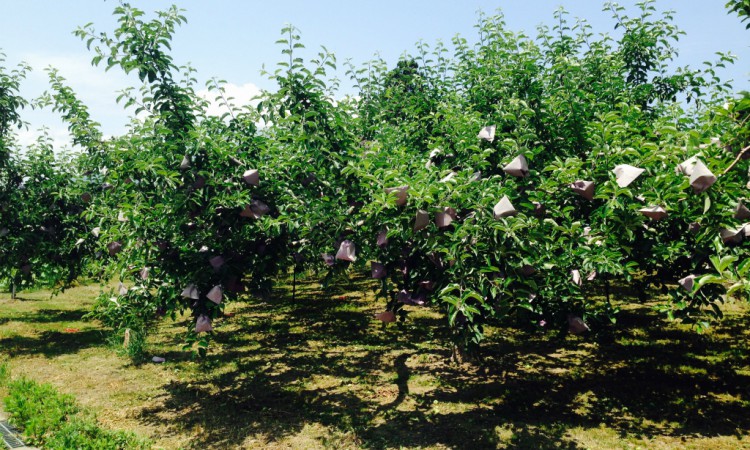
Furthermore, a task of “bagging and removing bags” for individual apples will be done to create beautifully colored apples depending on the varieties.
Harvest
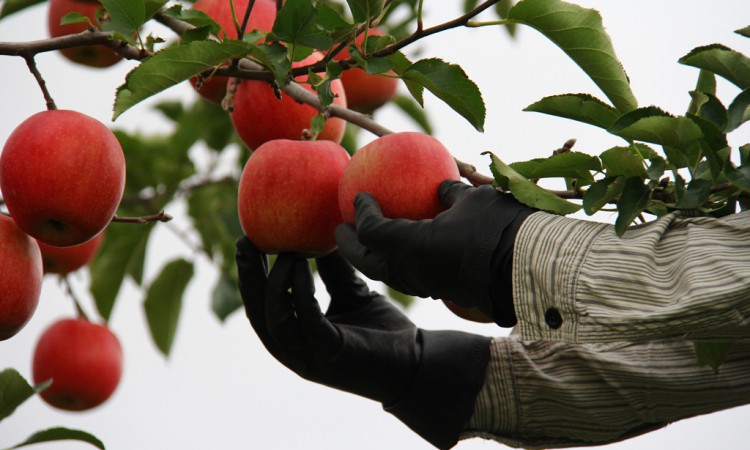
Throughout the year, the apple fruits will grow with many tasks by farmers and their harvest time starts in August. Farmers will pick apple fruits one by one with enough care not to damage when harvesting.
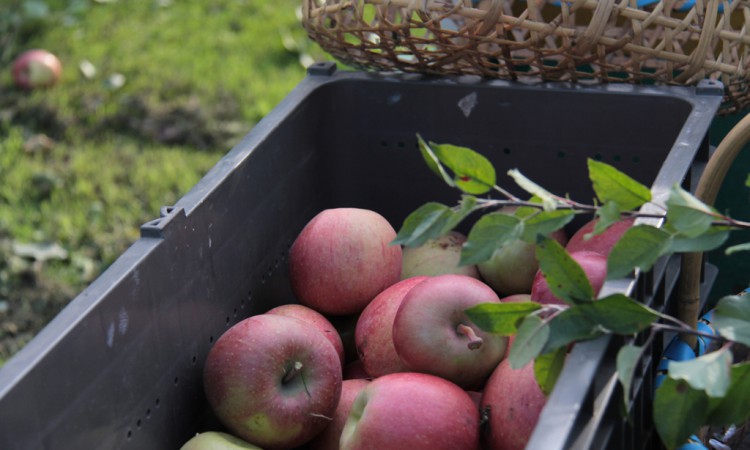
These each tasks result in “Aomori’s apples” that is much more delicious.